22 July 2010

Pre - Great Discussion Meeting 2010


Getting ready for the Great Discussion Meeting 2010 .

25 June 2010

Song of Youth

Though clouds dot the sky
and the wind blows
the sun rises again today
the morning sun of youth
holding within itself limitless power
as it spreads its light abroad
advances on a correct course

~ "Song of Youth"


What is my correct course?

At age 30, I feel I had so much yet to accomplish. Will I be a worthy disciple to my mentor?

Must work harder!

05 June 2010

Be Patient and Persevere

"Don't despair when things don't go as you had hoped. Don't become depressed and sorry for yourself. Be patient and persevere, putting down solid roots and creating the cause for more fortunate circumstances to present themselves in the future. Faith is about putting down roots of happiness in the soil of our present reality. Eventually sprouts will appear and flowers will begin to bloom in beautiful profusion signalling the arrival of a spring of victory and success."

- Daisaku Ikeda

20 May 2010

Revisiting The Three Poisons

In most industries, when a man begins on a new job, he will be placed on probation until confirmation. While he is on probation, he does enjoy all the benefits of the job. But once the probation period is over, there will be expectation if he were to continue to flourish in the job. The same idea can also be applied to the Buddhist practice. When we start to practice Buddhist and chant Nam-Myoho-Renge-Kyo, benefits will start pouring in and our immediate problems will be solved. But after practicing for some time, if we fail to develop a sense of gratitude and apply ourselves in the noble endeavors of Kosen Rufu, we will eventually be frustrated. We have to repay this debt of gratitude by encourage our fellow members, care for our families and be a positive source of energy in our social circles. The practice of Buddhism is ultimately the practice of compassion. The power of Nam-Myoho-Renge-Kyo is manifested in direct correlations to our efforts in this aspect.

Some time back, I gave a lift to a colleague when a conversation on the Three Poisons was initiated. I explained that the Three Poisons in Buddhism refers to the poisons of Greed, Anger and Foolishness which is the cause of all man-made disasters in human terms. Having come from a Methodist background, she commented that the concept of Foolishness is the most difficult to understand compared to Greed and Anger. The concept of Foolishness came to me quite naturally due to my upbringing. I understand it well enough as the delusional state of life where one fails to differentiate right from wrong. But receiving such feedback, I did come to realize that it can be difficult from those who are not familiar with oriental philosophies.

Given time to meditate and ponder deeper into the issue, I finally develop an understanding which I would like to share here. The key lies in the compassion. The Three Poisons are all human characteristics that run counter to compassion. There are the drivers of selfishness and egoism. It is the selfish materialistic impulses that generate Greed. And Anger is generated when selfish desires are not fulfilled. And finally, Foolishness. Foolishness is the result of selfish arrogance. It is when we lose our humble seeking spirit and turn away from wisdom thinking we are above it.

This is also why the practice of Kosen Rufu, or the practice of compassion is important. It is this practice that changes and transforms these inherent Three Poisons in our lives into medicines for societal improvements.

Since Vesak Day is coming, I would also like to briefly share about the efforts of the historical Buddha Shakyamuni. Shakyamuni lived in a time where the extremes of hedonistic and ascetic behaviors are rampant. Note that both these extremes are inherently egoistic pursuits. Buddhism was born to correct that situation. Hinayana Buddhism was first developed to teach everyone that we are all inherently equal because we share the same Buddha nature. But with time, even Hinayana fell into the traps of the Three Poisons and become a ritualistic religion lacking in compassion for the masses. Mahayana Buddhism arose then to encourage the compassionate acts of encouraging the common lay people. But again, with the passing of time, Mahayana fell to egoism of another form. With the deitifying of Shakyamuni and his disciples, the acceptance of our Buddha nature is diluted and eventually, the concept of the equality of all life is lost and class distinction is formed.

It is the Nichiren who first recognize these and restore Buddhism to its original intent to teach both the existence of our Buddha nature and the importance of compassionate acts. And it is Soka Gakkai today who are putting Nichiren’s teaching into practice and going all out for Kosen Rufu. It is my greatest pride to be part of this movement.

Further Readings on The Three Poisons

15 May 2010

Seeing the Good in Others

"How do you see others? In most cases, your vision of others is a mirror that reflects your own mind just ad it is. If, for example, you are a greedy, covetous sort, you will not be able to perceive others' sincerity. Even honesty will appear dwarfed because of your enormous greed. It's not that others lack integrity. It's that you are too greedy."

- Daisaku Ikeda

26 April 2010

The Weightage of Chinese Language

The weightage of Chinese Language for the PSLE is in debate recently. Personally, I would call those who call for a reduction of the weightage quitters. Although the argument that English is the medium used in all administrations in Singapore, the value of the Chinese cannot be ignored.

I used to be rather good in my Chinese. I remember scoring A1s when I was a student. But the truth is that with lack of usage over the years, my standard in the language has deteriorated much. However, I pride myself as having once exposed myself extensively in the language. For the value in a language is not in the usage, but the appreciation in its culture. I cannot write or read as well in Chinese as when I was a student, but my appreciation for it grows with time. The tenacity to work on doing well for it is also a lesson well-learned.

If you worry about the “Brain Drain” due to an inability to do well in the Chinese, then maybe we should be aware that these are also “weaker brains” that can’t cope. Then they should just go. I will not miss them.

16 April 2010

JC or POLY

For the past few days, the local newspapers carried the story of whether the local universities should allow a larger percentage of POLY graduates to enter the universities (at the expense of the JC students). Here is a brief of my take.

Firstly, the JCs are designed to prepare students for universities.

I appreciate the embracing gestures of the universities to admit POLY graduates. I believe this allows "slow-starters" an opportunity for higher education. And I admire those who, having had to go to the ITE, work hard, and progress to POLY and then the universities. These are the fighters.

But I have no sympathy for those who qualified for JC, but chose to go POLY on their own free will and then whine about not being given a shot at the university.

Go to the JCs if the university had always been your target. If you can't make it to the JC, but still wished to study at the highest level, then you ought to prove that you deserve to be with the best.

And remember that an university offered to you means an opportunity lost to another. Universities graduates owes the society a profound debt of gratitude. It is a privilege, NOT a right.

14 April 2010

Context

Context...
Context...
Context...

One of the most crucial factor in writing encouragements.

31 March 2010

Lesson from the Titanic

Molly Brown was on board the Titanic as a first class passenger. When the passenger liner RMS Titanic tragically sinking in on April 14, 1912 after striking an iceberg. There was a chaos and panic all around.

She volunteered to help others board the lifeboats for most of the night until finally convinced to leave the ship in Lifeboat No. 6. Most of the passengers were desperate for the lifeboat to get to safety. But she insisted that the lifeboat to go back to look for survivors after learning that it was not yet carrying full capacity.

Initially she was met with strong opposition from Quartermaster Hichens, the crewman in charge of Lifeboat 6, who believed that nobody would be saved by going back as the boat would be pulled down by the ship's suction or by the force of everyone scrambling to get aboard.

But she shouted courageously to a panic-stricken fellow passengers: "There's no danger. It simply can't go down, because I'm on it and I'm unsinkable." Her bantering words, which rang out with the determination never to be defeated and never to give in to despair are said to have given courage to her fellow passengers.

Those who stand up at a crucial moment demonstrate genuine greatness.

22 March 2010

This one for the Twilight Fans


No. I don't think Vampires are cool at all.

02 February 2010

The Return of Zalankai

And so the month of January ends. I was thinking about how time seems to pass faster as we grow older; the DJ on the radio said the same thing. As we become busier and laden with increasing responsibility, time is indeed a luxury. I would like to think that I began the new year managing my time reasonably well and had fallen into a firm rhythm.

And highlight of the month of January for me had to be the return of the discussion meetings of the Singapore Soka Association. After half the year of suspension of the meetings due to the precautions measures taken against the H1N1 pandemic, the discussion meetings resumed with vigor across the country. In my chapter, we managed an attendance of 155 from 4 districts.

The discussion meeting is an informal gathering of people from all walks of life coming together to share their struggles and challenges, as well as to encourage one another to achieve victories over our various problems through the application of Buddhism in our daily life. The positive social force generated by this seemingly insignificant activity cannot be underestimated. In Singapore currently, over 400 districts were conducted simultaneous at various members’ homes with about 30-50 members and friends of the association attending at each session.

I learnt recently that the current top ‘O’ Levels student of the school I’m teaching at, Atreya, is also a member of Soka Gakkai. Hence, I invited him to speak at one of the discussion meeting I was facilitating. He shared frankly that it was the application of Buddhist principles that contributed most to his victory in his studies. Another student, Lup Seng, who made vast improvement from his preliminary examination to the ‘O’ Level was also in attendance. But he claimed to be too shy to share.


Atreya Sharing...

SRS District 2

SRS District 3

SRS District 4


12 January 2010

Song of Human Revolution


Minus One Version


Original Japanese Version


Localized Mandarin Version

14 December 2009

Crash!

This morning, as I was ferrying the girlfriend to work as per the routine every school vacation, a black Mazda 6 forced his way to overtake me along the merging slip road leading to TPE. Once we were on the expressway, a lorry immediately cut in front of me forcing me to slow down significantly. The next thing I know, the lorry swirled and I jammed my breaks. I managed to stop my car just before hitting the lorry.

The next few seconds feels almost like a slow motion feature when the black Mazda 6, which was now just ahead of the lorry, swung across the expressway in a fashion usually seen only in a Hollywood movie and crashed into the side railings.

In that instance, I felt the protective powers of the shoten zenjin. Had I not backed away at the slip road as he was trying to overtake me, the positions of our vehicles would be reversed and I would be the “Hollywood stuntman”. On my return trip after sending the girlfriend to work, I noted that an ambulance was at location. I guessed he sustained quite a serious injury. I wish him well and speedy recovery.

And I believe the hour plus daimoku I did during gajukai duty works.

Nam-myoho-renge-kyo.

25 November 2009

Nine Years On

And so. Today is the 9th year anniversary since I met my mentor Daisaku Ikeda in person.

Have I done enough to help him fulfill his great goal of Kosen Rufu?

[ Kosen Rufu = A vision of social peace brought about by the widespread acceptance of the Buddhist core value of unfailing respect for the dignity of human life. ]

Need to reflect on myself seriously and renew my vow before the Gohonzon.
Nam-myoho-renge-kyo.

17 November 2009

As the school bell softly rings

As the school bell softly rings

Time to say our farewells

We are no longer the same

After the hours spent together


It is your struggle and your toils

That brings a new clarity

To the window of wisdom

That shines forever within


As we blundered our way

We learn to find our paths

Hearts filled with treasure

We set sail with confidence


Let every youthful hearts venture forth

Into the great ocean of life

Riding every waves

Braving every storms


A thousand thoughts this day

With a single thank we sing

Cherishing gratitude in our hearts

As the school bell softly rings


~ Dedicated to the MF graduating class of 2009

07 October 2009

The Heart of a Bodhisattva


Haven't had the luxury of time to write a decent blog entry. So I will just share my latest desktop picture. It represents my vow to be devoted to the Lotus Sutra -- The sutra which emphasized the Bodhisattva Way.


22 August 2009

30

I am officially 30 years of age.

And the first thing I learnt is that emotionally, it is not as dramatic as when I turned twenty. I remember turning 20 in the guardhouse of our Singapore Soka Association penning my thoughts. I was on Gajukai duty that day a decade ago.

On this birthday, I went to work as usually, give extra tuition to my students who will be having their GCE ‘O’ Levels examination soon and then proceed to meet my fiancée for a simple dinner. Towards the end of the night, she asked how that felt like. I simply reply, “Nothing much.”

From birth to the age of 10 – A carefree childhood
From 10 to the age of 20 – Learning about the world
From 20 to the age of 30 – Defining my character
From 30 to the age of 40 – Contributing to my community

I guess that is it. It is simply a realignment of my personal priorities. Nothing more.

And my current priorities are as follows:

Repaying my debts to the Soka Gakkai
Not monetary debts. I remembered a time of observing how my mother struggled to raise three children of her own. And it is my conviction that she succeed due to our family’s involvement with the Soka Gakkai. Throughout my formative years, it had always been Dr Daisaku Ikeda’s encouragements that gave me strength when I needed it. It is he who taught me the correct way to live my life. And I know that his greatest wish is for Soka Gakkai to continue to develop far into the future and to develop innumerous youths who will shoulder the responsibility of Kosen Rufu. This is my vow, to always support the Soka Gakkai in any way I can.

Building my wealth
Buddhist principles stated clearly that money is not a requirement for happiness but is honest to point out that having money is useful in supporting that cause. Building wealth for wealth sake is dangerous and only invites the poison of greed into our hearts which is why I have to constantly remind myself of my original purpose in wanting to be rich. I control my money, sometimes so tightly that I had been accused of being stingy. But I see it as the only responsible thing to prepare for that day when I need to have enough to let my mother live a comfortable life after she loses her ability to generate income due to advancement in age. And also to ensure sufficient fund to start my own family unit which I have every intention to do so in the near future.

Developing the youths
I am fortunate to be in the educational industry – an industry which I sincerely believe has the potential to create the greatest values in life. In order for any society to prosper, there had to have some form of peace, culture and education. Building peace is the foremost requirement. For without peaceful conditions, it is almost impossible to better our society. But peace can only be sustained through the establishment of a positive culture which enhanced peace. To enrich lives, an appreciation of the aesthetics and the arts cannot be ignored. And finally, nurture creativity and inspiration for culture, education is the only means. I may or may not remain in the public education for the long term, but I firmly believe, at this point of time, that I will always be connected to the education business.

* * * * *

I was with the girlfriend at Borders yesterday when once again; I keenly felt the inadequateness of both the quantity and the quality of the books on Buddhism. I do write about Buddhism on a number of occasions and I have an intensive urge to organize them and have them published somehow in the future. But I have no concrete plans on this yet.

I may not have perfect understanding but I do pride myself on a decent amount of knowledge on matters religious having attended mission schools from kindergarten all the way till junior college. I like to think that my exposure to Christianity is not lacking. Adding my personal intensive study of Buddhism in my formative years, I concluded that the Buddhism practiced by Soka Gakkai has the quality to enhance and enrich our lives and would recommend it to anyone.

The Prime Minister in his recent National Day Rally’s speech; touched on the issue of race and religion in schools. As a teacher in a government school, I am aware of his concerns. And I am in full agreement of the importance of racial and religious harmony in Singapore. This is why I had stated the following countless times in this blog and would continue to do in the future as I know that some of the readers of this blog are young impressionable students:

I do blog about my understanding of Buddhism. And I do recommend the practice of Buddhism with the Soka Gakkai if you are seeking a philosophy to guide your life. But if you already have an alternative religion which may have conflicting views from mine, it is perfectly fine. I believe harmony must be maintained. Do not attempt to debate me on the finer points of our religions. I will not entertain you because undermining other faiths is never on my agenda. I only wish to share a philosophy which I sincerely believe can help to improve lives. I will only entertain honest questions if you are honestly seeking to learn voluntarily.

Nothing more.


19 August 2009

30 July 2009

Busy times

Tried out the new branch of Pepper Lunch at Punggol Plaza. Somehow I feel that for their cook-it-yourself concept, it seems improper for it to be in a food court. Their Ang Mo Kio or Hougang branches would do better with all the sauces available to the customers to experiment.

I started on a new module for my Masters course. A lot of deadlines staring in my face. I see busy times ahead. And I had yet to complete the assignment from the previous module.

But I felt the urge to blog after completing my letter to Sensei. It had been 3 months since I last reported to him. Time really flies. This round, I told him about

  1. Jacky Kong’s receiving of the Gohonzon
  2. My Mother’s victory over her fall in through the chanting of Nam-myoho-renge-kyo
  3. The Whampoa Zone MD&YMD Formation Day Commemorative Meeting

I will be turning 30 soon. It will be another milestone to seriously reflect on my life so far.


17 July 2009

Everyone can get smarter!

Until about 20 years ago, most scientists thought that intelligence was mostly inherited, and that the environment’s impact was limited. Important findings supporting this view came from studies of identical twins who were separated at birth. Even though adopted into different families, they usually showed very similar intelligence, which indicated that genes dominated.

Now scientists think that those early studies underestimated the effect of the environment. First, adoptive families probably don’t vary that much — they are generally supportive and emphasize success in school. Second, other data have shown that moving kids from low-quality to high-quality schools boosts IQ scores.

The secret to getting smarter is really not a big secret: Engage in intellectual activities. Read the newspaper, watch informative documentaries, find well-written books that make intellectual content engaging. Perhaps most important; Watch less television. It’s rarely enriching, and it’s an enormous time-sink.

Just as exercise experts advise many small changes rather than a vigorous program (which will likely be dropped), I think the best way to get smarter is to put a little more learning into every day. The trick is to develop the habit of looking for those opportunities.
- theapple.com

The Just

The powerful may appear great, but in reality they are not. Greatest of all are the ordinary people. If those in power lead lives of idle luxury it is because the people are silent. We have to speak out. With impassioned words, we need to resolutely attack abuses of power that cause people suffering. This is fighting on the side of justice. It is wrong to remain silent when confronted with injustice. Doing so is tantamount to supporting and condoning evil.
1260: Nichiren Daishonin submits his treatise "On Establishing the Correct Teaching for the Peace of the Land."

09 June 2009

The Perfect Ending

Read about perfect numbers today. The first four perfect numbers are 6, 28, 496 and 8128. These are known since ancient times.

And they are beautiful numbers.

6 = 1 + 2 + 3,
28 = 1 + 2 + 4 + 7 + 14,
496 = 1 + 2 + 4 + 8 + 16 + 31 + 62 + 124 + 248
8128 = 1 + 2 + 4 + 8 + 16 + 32 + 64 + 127 + 254 + 508 + 1016 + 2032 + 4064

Mathematics is beautiful.

= = = = = = =

Anyway, last weekend was the SD RUFU Run... My swan song for the SSA Students Division. "Grow Now Together~~~"


03 June 2009

A day in the live of a teacher

Student knocks and opens the room to the staffroom...

Student: 'cher, you free now?

Teacher: Obviously not. If I were free, I would be at home and not in school.

10 May 2009

Cause and Effect

That motivates me as a person. I would have to say that the only reasonable thing to say would be the understanding of cause and effect. When we want a certain effect, we will plant the cause. Simply. But there will be some people who will immediately object asking “Cause and Effect? Isn’t that a tad trivial?” Might be so. And might not be. The understanding of Cause and Effect is the basis of everything we believe in. The clarification of our understanding of Cause and Effect is the heart of our personal life philosophy or religion. And that will determine what kind of person we are and defines our identity. Therefore, the understanding of Cause and Effect is central to my Buddhist thoughts.

When a doctor wants to cure a patient, it is necessary to identify the cause of the problem. The wrong diagnosis could result in disaster. Therefore, the identification of the cause cannot be taken lightly. This is even more so when we try to identify the cause of human sufferings. Everyone seeks to be happy. Nobody can honestly claim that they reject happiness. But what is the cause for happiness?

There are people who subscript to the idea of indeterminism. These people will decide that life happens by chance. And there are others who hold on to the belief of determinism. But regardless of whether they think life happenings are predestined or otherwise, it is not hard to accept causality within the parameter of their current existence beginning with birth and ending with death. This understanding of Cause and Effect are represented by Confucianism, Taoism and many western rationalism including the Abrahamic religions as well as person who believe in the absolute secularity of modern science. But such understanding cannot provide satisfactory answers to questions such as “Why are people born into different circumstances?” and “Why are evil sometimes not punished and good not rewarded?”. Moreover, for people who attribute causes to the external forces of nature or to some deity or god, they run the danger of limiting human will and autonomy.

The alternative is to recognise the existence of karma and the cyclic nature of life. With karma, it simply means that we reap what we sow. It takes a lot of courage to accept the concept of karma however, as it means to take full responsibility of all the happenings around us even if we do not remember what causes we created. Further, it is not hard to realise that it is way easier to create negative karma than positive ones. Hence the despair that the odds of our lives going in the negative direction is higher than the positive. But I must choose to accept the concept of karma because the alternative cannot stand to the scrutiny of Cause and Effect.

To further our understanding of Cause and Effect, we have to realise that often, “scaffolding” is required. We cannot expect someone to understand calculus without first learning basic arithmetic. Similarly, the understand of Cause and Effect needs a certain sequence of building up. Many causal learner of religions recognise Buddhism only by the fact that it teaches the Four Noble Truth and the Eightfold Paths. But in reality, these teachings are merely preparatory for the main lessons of Buddhism. If one is to only base on these basics, they can be termed as practicing Hinayana Buddhism. The main characteristic of Hinayana Buddhism is to focus on the elimination of unhappiness thinking that this elimination is the cause of happiness. But that is highly passive and not the complete intent of Buddhism. Hinayana posits the cause of unhappiness as earthly desires. But since earthly desires can never be truly eradicated, there are limitation to Hinayana Buddhism. In contrast, Mahayana Buddhism focussed on helping others attain enlightenment, directly seeking positive causes towards happiness. This is termed the Bodhisattva Way which concentrate on creating positive karma by helping others rather than worry about our accumulated bad karma. I choose to be proactive in this respect.

We move on next to the idea of enlightenment, which is to manifest the state of absolute happiness regardless of our circumstances. Pre-Lotus Sutra Mahayana Buddhism described Buddhahood as an unattainable ideal much like the concept of utopia. The purpose is to develop a strong sense of yearning as well as to give everyone a common direction to strive for. This is another case of “scaffolding”. It is hence, not surprising that while many scholars recognise the status of the Lotus Sutra as the highest teaching of Buddhism, many lack the confidence to practice it as they view it as “post-graduate stuff”. In fact, it is within the Lotus Sutra that stated that “this sutra can only be understood among Buddhas”. But upon careful examination, we will find that it declare that Buddhahood is possible for all. Only with such confirmation that the destination is real can Cause and Effect have any meaning. Therefore, I choose to practice the Lotus Sutra.

But then comes an interesting twist. Deeper study into the Lotus Sutra (specifically in the Life-span chapter) reveals that Shakyamuni did not attain enlightenment in his current lifetime but rather, in the infinite past. What he is trying to explain is that his current enlightenment is possible only because he had already attained Buddhahood in the past. Therefore, it is not the case of his Bodhisattva Way being the Cause and the Enlightenment the Effect, but the other way around. His innate Buddha nature is the Cause for his Bodhisattva way. This is a new breakthrough in our understanding of Cause and Effect. We are all inherently Buddhas who continue to suffer for the sake of demonstrating the effectiveness of the Bodhisattva Way in bringing about happiness.

The final progression of the understanding of Cause and Effect is the fact that Shakyamuni declared: “At first, I practiced the Bodhisattva Way,“ when explaining about his enlightenment. This cyclic nature of Cause and Effect is consistent with the cyclic nature of life understood by Buddhist. Combined with the understanding that Buddha nature last for infinite among of time and that life is eternal, we can conclude that Cause and Effect of happiness actually occurs simultaneously. The moment we rouse the courage to make the determination to do good for others, our Buddha nature is also activated and compassion and wisdom will well forth. And when the good is done, we renew our conviction on our Buddha nature and derive fresh courage. And then to repeat that consistently. This, I believe, is the happiest way of life.

To recap, the provisional, pre-Lotus Sutra teachings are temporary expedients to set forth a view of enlightenment. The complete understanding of Buddhism has to come with the progression of the understanding of Cause and Effect from “teaching of cause and effect as disparate nature”, to “teaching of cause and effect as identical nature”, to “teaching of cause and effect as eternal existence”, and finally to “teaching of cause and effect in a single life-moment”.

The above essay is based on the author’s current understanding of the fivefold comparison.

04 May 2009

Swill Flu


It is the season to be careful again...

20 April 2009

To abort or not?

Today’s CE lesson was on the topic of abortion and I was to present this controversial issue to my students. The objective is to encourage them to think deeper into controversial societal issues. In some countries, the abortion issue remains one of the broader and more controversial societal issues. A broad spectrum of positions exists on this issue, from those who advocate abortion-on-demand at any point during a pregnancy on the one end (100% pro-choice), to those who oppose every form of abortion on the other (100% pro-life). Between these two there is a considerable range of positions.

Abortion is the termination of a pregnancy early before the fetus can survive outside the womb. If it occurs spontaneously or naturally, it’s commonly referred to as a “miscarriage”. This is usually because the fetus has passed away in the womb. Under these circumstances, the pregnancy may be expelled from the womb naturally or may require surgery. Abortion can also be induced. The fetus together with the placenta is expelled from the womb before it is developed enough to survive and will result in its death.

An abortion is usually done through a day surgical procedure if the pregnancy is less than 12 weeks. Under anesthesia, a plastic hollow tube is inserted into the womb and suction is applied to empty the womb. The procedure is significantly more complicated beyond the 12th week.

Some of the risks of abortion include bleeding which may require hospitalization and blood transfusion. There may also be damage to cervix which may result in early delivery or pregnancy loss in subsequent pregnancies. Infection which can cause fever and pain may also result impairing future fertility.

Some of the basic local Singapore Laws are as listed:

  • The abortion must be performed by a gynecologist in a certified approved institution
  • Your pregnancy must be less than 24 weeks
  • You must undergo pre-abortion counseling at the approved institution where the abortion is to be carried out if you are above 16 years old or the Health Promotion Board Counseling Centre if you are below 16 years old (A Certificate of Attendance will then be issued to you. This must be shown to your gynecologist before you can be go for the abortion)
  • You can only undergo abortion 48 hours after the counseling
  • You must undergo post-abortion counseling which includes family planning education
  • The debate

Pro-life group often argued that abortion should not be allowed as the fetus is considered a life. Hence, abortion is equated to murder. They generally believe that human life should be valued either from conception or from fertilization. To advocate abortion is to be morally bankrupt.

Pro-choice describes the political and ethical view that a woman should have complete control over her fertility and the choice to continue or terminate a pregnancy. Some people who are pro-choice see abortion as a last resort and focus on a number of situations where they feel abortion is a necessary option. Among these situations are those where the woman was raped, her health or life (or that of the fetus) is at risk, contraception was used but failed, or she feels unable to raise a child.

Both viewpoints, to a certain extent, are reasonable in their own rights. The debate occurs however, when pro-life individuals accuse the pro-choice as being “pro-abortion” or “pro-death” while the pro-choice individuals accuse the pro-life as being “anti-freedom” or “anti-reason”. This is an example of political framing which is a technique of debate where you attempt to paint the opposition in an unfavorable light.

From the standpoint of the pro-life, there is nothing wrong in valuing life. In fact, life is the most valuable possession any human can have. However, we have to understand that life is not a discrete quantity. Life derives meaning only in the context of values. I believe in the infinite potential of good in all men. However, if one does not manifest this potential for the betterment of society, we cannot claim this life is more valuable than others.

Many had asked why as a declared, devoted Buddhists, I eat meat. And I loved meat. It is however, a misconception that meat is not allowed in Buddhism. The vegetarian diet is recommended in many Buddhists schools mainly because plants are regarded as life with less value than animals. But they are life regardless. It is not for the sake of not taking life that some Buddhists do not eat meat. It is simply to minimize the debt of gratitude one owns to the life of the animals that died for the purpose of sustaining our lives. If we eat meat, we simply have to develop a greater appreciation for that lives of the animals that died for us. The taking of another life to sustain one’s own cannot be avoided. What is more important is to kill the will to kill.

Returning to the topic of abortion, I would reckon that in certain circumstances, the value of the woman have to outweigh that of the fetus and abortion can be a reasonable consideration. No one in their right mind would willingly kill a baby. But in situations where calculated, responsible decision based on factors such as the health of mother or the unborn fetus, the consequence of rape, the ability of the family to raise the baby, etc, I believe abortion can be accepted.

The questions that I highlighted for the students to reflect on is where they truly stand in light of the “pro-life” and “pro-choice” debate, and of course one of the main contention of the debate – When life begins?

  • From fertilization?
  • From the stabilization of the fetus (approximately 2 months)?
  • After the actual birth?
  • Other?

My views on the nature of life can be found in this earlier post.

I chose others. For I believe life is eternal and we are ultimately all part of the same cosmic whole. Fetus, our lives, plants, animals, etc. We are just different manifestation of this cosmic life. We can only hope to create value within our capacity in order to enjoy the process of life. In the event that we hurt another life (like eating!), we can only strive to repay our debts of gratitude by contributing to the betterment of our community, our society, and our cosmic life.

11 April 2009

Activating the Infinite Potential Inherent in Our Lives

The starting point of this short study is to recognize that the purpose of life is to become happy. If the objective of life is not to become happy, then it becomes worthless to discuss Buddhism. For a true religion must serves to make the happiness of humanity a priority. That is the original purpose of religion. Unfortunately, it is all too easy for religion to become corrupted and degrade into a moneymaking enterprise or a propaganda device for hate and discrimination. This is why study is important. Correct study is to be informed and to empower individuals with the ability to discern right from wrong.

With regard to the topic of happiness, there are two kinds as explained by Josei Toda, the second Soka Gakkai president. They are “relative happiness” and “absolute happiness”.

Relative happiness is the result of fulfilling our desires. Hence, it is dependent on whether on the conditions which surround our desires. Moreover, “relative” indicates “comparison”. Relative happiness is felt when one feels better off or advantageous in comparison to others. Therefore, we can also say that “earthly desires” denotes a yearning to be better off than others. That means that desires such as “wealth”, “status” and “attractiveness” only has meaning when compared to others.

Absolute happiness, on the other hand, is a state of life which people continue to experience joy in living wherever they may be or whatever they may be doing regardless of their prevailing circumstances. It is a difficult endeavor to cultivate such a life-state, but a necessary one if we ever hope to derive true joy from our existence. To achieve absolute happiness requires ceaseless efforts to develop oneself in the acquirement of wisdom, good fortune and strong life-force. This is the purpose of attaining Buddhahood.

To attain Buddhahood can then be equate to the ceaseless efforts to acquire wisdom, good fortune and strong life-force in order to overcome all life’s sufferings. Practicing Buddhism will then mean that we shift the focus of our lives towards the achievement of absolute happiness instead of relative happiness.

A little more is required to explain on the idea of what a Buddha is. Traditionally, when we hear the name “Buddha”, we automatically associate it with Shakyamuni, the founder of the original Buddhist Order. But we have to understand that Shakyamuni is the first historically recorded Buddha. And his mission is to teach others that they too, can become a Buddha just like him. But over the years, with emphasis on how great the life-state of a Buddha is, Shakyamuni eventually got deified by many Buddhists schools and treated as if he were a God of some kind. This is incorrect.

Buddhism expounds that every individual is equally endowed with a great innate potential within our lives and that this potential is none other than Buddhahood. Hence, Buddhism is a teaching that strives to remind everyone that we should not feel that we are inherently weak or dependent, but to be awakened to the fact that we can all become individuals of strength and spiritual autonomy.

There continues to be many schools of Buddhism which mistakenly regard Shakyamuni as a form of Supreme Being or a deity, and it is with great gratitude that I am able to study Buddhism under the Soka Gakkai International, an organization currently demonstrating actual proof of the original spirit of Buddhism.

The next important point to note is that although there are some other Buddhists schools that recognized the fact that we can all become Buddhas, many held the beliefs that it requires counts lifetimes of assiduous Buddhist study and practice to attain this enlightenment. But this is also incorrect. In the Lotus Sutra, it is revealed implicitly that we are all capable of becoming Bodhisattvas of the Earth. This type of Bodhisattvas are Buddhas in nature but took the appearance of a Bodhisattvas in order to lead others to enlightenment.

Nichiren Daishonin was the person who first recognizes that fact based on his studies into the Lotus Sutra and strives to explain it to others. He then taught that in order for us to manifest our capacity as a Bodhisattva of the Earth, we had to chant Nam-myoho-renge-kyo which is the name of the Buddha nature within us.

To be continued…

DISCLAIMER: This study is the product of my personal study of Buddhism. I do not claim to be perfect in my understanding but I just try my best to share what I learnt. I can’t help it if, in the event of you reading this, that there are points you disagree with but I welcome to contact me in person and speak with me so that we may learn from our exchanges. Anyone with any enquires are also welcome to contact me.

Buddhism is best studied and learnt through direct human-to-human, heart-to-heart dialogue!!

04 April 2009

Greed can be Good

I have been urged to blog again, this time by CX when I was performing SYC duty today. I had not been blogging much over the past few months. Mainly because the increased pace of life is getting to me. I am constantly feeling that I am being rushed from one point to another ceaselessly. Writing slowly took a back seat. I never lost the passion for writing though. But it is an activity that requires time which is somewhat a luxury nowadays. I try not to write meaningless things if I could help it. But meaningful post requires even more time to think out than mundane ones.

I should try though. Here’s a short one from my sharing at last month’s discussion meeting:

We know that all man-inflicted sufferings begin with the three poisons. The first poison is Greed. There isn’t a single mortal who is without greed. We can be greedy for many things, from money to fame, from glory to status, from attention to lust. And when we realized that the pursuit of these desires are not bringing us fulfillment, we naturally become angry. Anger is the second poison. Anger is the state of arrogance, where we blame everything and everyone else when things do not go in the way we want. But the arrogance prevents us from realizing that the problem and the solution is within ourselves. That lack of rationality is foolish. The third poison is Foolishness which is the inability to differentiate right from wrong. And blindly pursuing the wrong ideals brings us to the pursuit in the wrong desires. That will result in more Greed and the cycle continues.

Many religious teachings explained that we have to eradicate these poisons from our lives. If we can succeed, then our problems will vanish. But there is a problem. Without desires, then we will not even have life. This is impractical.

Nichiren Buddhism offered a simple practical solution though. The key to the teachings of Nichiren is that while the poisons are strong and debilitating, it is always possible to turn the poisons into medicines. That he meant is that it is not possible to totally eradicate poisons from our lives, but there is a way where we can use these Greed, Anger and Foolish in a positive way.

For example, if we have to be greedy, then let’s be greedy for good fortune and for enlightenment. If we have to be angry, then let’s be angry with injustice and corruption. And if we have to be foolish, then let us be foolishly gracious. That said, the key to actualizing these transformation from poison to medicine is not as straightforward as a shift in mindset. It is a painstaking effort to devote our lives for kosen-rufu. To constantly exerting every ounce of our energies into encouraging another human being to recognize the wisdom, courage and compassion we all possess and some realized as Buddha nature.

21 March 2009

Motivation


We all need to be motivated from time to time. But encouragement is a lot more than just a nice poster.

"The heart is the most important." ~ Nichiren

13 February 2009

Blasphemy?

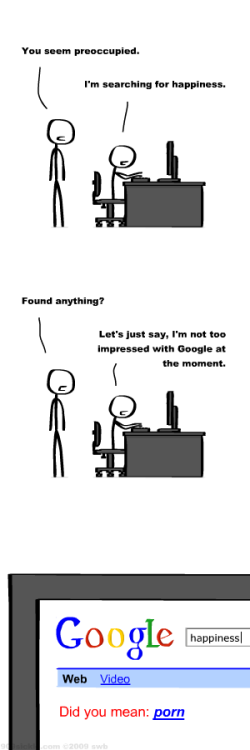
Found this gem when surfing the Internet randomly. Burst out laughing.

Had not been blogging. Chinese New Year celebrations just concluded. Back to normal life.

16 December 2008

Extending Hands, Connecting Hearts

I was feeling feverish and my coughing had been persisting. It is really irritating to be sick during the holidays.


Anyways, last Saturday (13 December) I proceeded to the Vivocity to support the Harmony for Humanity Concert (The 4th one I think) as a Gajukai of Singapore Soka Association (SSA), a partner of Mercy Relief who organised the concert. The Guest-of-Honour was the Senior Minister Goh Chok Tong.

GD was to receive an award of commendation on SSA behalf from Mr Goh. Alas, I was not quick enough with the camera. But I took this picture which doesn’t need quick fingers instead.


Incidently, it was GD’s birthday. The YMDs got him a golden egg and we took the opportunity to take a commemorative photograph.


10 December 2008

Marching towards the end of the year

This blog is overdue for an update. But I am having a December with a long to-do list for the first time. *sigh*

Regardless, X'mas is coming...

22 November 2008

The Soka Movement

A new departure for me as I am returned to Serangoon South Chapter to promote our Soka Movement there. It is time to get back to basics. What exactly is our Soka Movement? Sensei explained it in the NHR - Dance of Life:

Buddhism is an eternal and unchanging law that pervades human life and the entire universe. It is also the guiding principle for the realization of peace and happiness for humanity. As such, it in no way contradicts modern science. Rather, it is a philosophy that can lead science and technology in a direction that will contribute to people’s happiness and well-being.

The Soka movement aims for what we call human revolution, the inner transformation of the individual through the teaching of Buddhism. Society is made up of human beings; we are the creators of our reality. As a result, we believe that by cultivating our lives, our hearts, we can change society. The purpose of the Soka Gakkai is to enable people to forge their character on a fundamental level, thereby bringing the fragrant flowers of peace and culture to bloom. We emphasize the view that all things arise from the human heart, the human spirit.


12 November 2008

Staff Retreat 2008

Staff retreat could be done locally. Alas...

10 November 2008

Seven Blunders

Sharing something from one of my heroes -- Gandhi

A few weeks before he was assassinated, Gandhi the Mahatma had a conversation with his grandson Arun. He handed Arun a talisman upon which were engraved "Seven Blunders," out of which, said Gandhi, grows the violence that plagues the world. The blunders were:

  1. Wealth without work.
  2. Pleasure without conscience.
  3. Knowledge without character.
  4. Commerce without morality.
  5. Science without humanity.
  6. Worship without sacrifice.
  7. Politics without principles.

Gandhi called these disbalances "passive violence," which fuels the active violence of crime, rebellion, and war. He said, "We could work 'til doomsday to achieve peace and would get nowhere as long as we ignore passive violence in our world."

09 November 2008

1 = 2 = 3

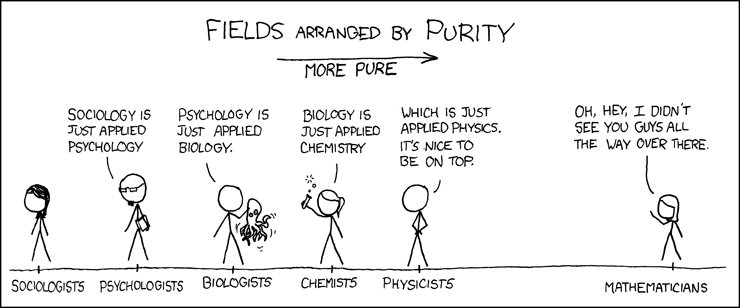
Something interesting I stumbled on for the mathematical mind.
Source from http://www.hunkinsexperiments.com.

03 November 2008

Another bites the dust

Finally back to work after the ICT. There was some degree of resentment after my return and I sort of expected it as I know that I have unfinished work which I was unable to complete on time when I went on my leave. Naturally these year-end administrative duties had to be covered by my colleagues. I am grateful for their assistance and apologize for their extra workload but in my defense, I would very much not to have to go for reservist if I had a choice. Anyone who knows anything about me would understand my stand of absolute pacifism and is against war (or the training for it). I am in the army only because I am law-abiding. But regular work resumes.

The secondary three students are back daily for supplementary lessons and I have my year-end work review coming up, as well as the markers’ report which I am not complying yet as there is a test to be set for those who failed their regular examinations. Moreover, the deadline for the major assignment for my Masters course is drawing uncomfortably near.

This coming vacation will also see me plow through my notes to prepare a localized package for Cyberwellness in my school. An unnoticed and generally thankless task.

Am I ranting? Maybe.

It is said that teachers have to be mindful when they blog and should not complain and whine so much on the cyberworld. “It sets a bad example.”

A week ago, a fellow teacher was blasted by the media for posting pictures of her in bikini online. To be honest, I am sure she is not the only one but was unfortunate to be brought to the attention of the media. And to be even more brutally honest, I think the media is making a mountain out of a molehill.

Please do not quote me wrongly. I am totally in agreement that responsible blogging is necessary. Posting an explicit sexual picture online is definitely wrong by my reckoning or any standards. But bikinis? Some people had obviously not visited the beach for a long time. If the media is to blast teachers for setting a negative example based just on bikinis, then they should take a closer look at the pop-stars whose influences on the young may not necessary pale in comparison to teachers.

Some standards should be adjusted. To be explicitly honest, our teenagers today do not need such influences to influence them to don a bikini. They probably have more pairs than an average teacher and are more proficient in tying the knots of those swimsuits than us tying our shoelaces. Like many vices in this world, bikinis as a fashion statement have gone beyond prevention. It is how to cope with it and liberate our mindset to a point where we understand that less cloth does not equate to sexual provocative.

I have been blogging for years as I find it a good exercise for some mental exercise and for self-reflection. In my younger days, there are bound to be some posts which I am not proud of. (No, I am a guy, so there are no pictures of me in bikini... ever!) Mainly it is the language I used which may be vulgar sometimes. But I would like to state that with maturity, I had weeded out such language from my usage. It was who I was and I don’t see why I should hide it. In fact, we know that anything posted online is never truly deleted. If anything, I would love to educate my students on the foolishness of my younger days and the anger in the heart such foul language brought. And if they are in the same situation I was, they should accelerate their maturing process.

We can be honest and responsible at the same time. So should the media be fair and the general public understanding.

Idealistic? Maybe. But we have to dream.

19 October 2008

ICT 2008

Midway through my reservist.

The armed forces are just getting nuttier. I stand by my conviction that the idea of deterrence to justify the maintenance of an armed force is lame. It still felt like the classic analogy of two neighbours holding a dagger each and placing at one another's throats and then declaring that since no blood was shed, they were friends. It is silly.

But the system is not without merit though. I had to concede that it serves to toughen many individuals who went through the system and also as a platform for employment for many others.

22 September 2008

Post-CFG

You simply cannot say that the past weeks have been uneventful. On the global scene, the collapse of Lehman Brothers will probably trigger episodes of financial drama through the world economies. Closer to home, the China Milk Scare is creating a quite a stir and affecting countless diary products.

But amidst all these, the Singapore Soka Association continued our efforts to promote friendship and social cohesiveness through our Chapter Friendship Gatherings (CFG) this September. My chapter’s concluded ours on the 21st September. It was an exciting period for those of us who were involved. Through a series of amateur performances, passages of encouragements were transmitted to all the participants and audiences spurring them to have courage, and live life with vitality.

Today and everyday, let's give out very best to all the challenges we face, keeping a positive attitude and persevering towards achieving all our goals and targets. Let’s make every effort to advance so that we can say at the end of each day, with a sense of pride and accomplishment.
~ Daisaku Ikeda


Now that the CFG is concluded, I guessed it is time for me to return to my studies. I am finding myself attracted to the educational learning theory of constructivism. I somehow find myself identifying this theory with the Buddhist concept of Shakubuku.

I would probably discuss it further after I read up more and give it a deeper thought.

08 September 2008

Beginning again with the end in mind

There is nothing wrong with being successful in society and enjoying a degree of fame. But ultimately, the lives of those dedicated to the welfare and happiness of others, even if they remain unrecognized, are the ones truly of respect.

How painful and frightening is the prospect of death for human beings! No matter how wealthy or powerful we may be, all is vanity before death. Everything is empty, like a dream or an illusion. But people do not fact this fact. Nichiren Buddhism teaches us that we can transform our karma and attain a supremely peaceful death that is the start of a journey to our next lives.

Again today the sun rises. And, in the same way, again today we chant daimoku, causing the inner sun to rise in our hearts. Once the sun rises, everything is illuminated. The challenge is to keep this sun blazing brilliantly in the depths of our lives, to each day renew our determination to chant, strive on, live victoriously and accumulate good fortune. Herein lies the ultimate path of happiness

~ Daisaku Ikeda

26 August 2008

Reasoning

I am a teacher who teaches mathematics. And one of the most common requirements a teacher has of his or her students when working on mathematics questions is to present the workings to the solution clearly. Why is this so?

It has everything to do with reasoning. One of the main aims of education is to impart the skills of logical reasoning to students. And Mathematics is the key to understanding deductive reasoning. Everything that happened has a reason and everything that we do have a reason. The problem is not the absence of reason but the communication of reason. There are reasons which are valid and there are reasons which are not. But a teacher will never know the reasoning of a student unless the reason is communicated clearly. And that is the purpose of clear working. It is for the teacher to examine in order to validate the reasoning without which, the teacher cannot educate the student properly on the right way to exercise reasoning.

There are a few major categories of reasoning. The most fundamental of them has to be analogical reasoning, inductive reasoning and deductive reasoning.

Analogical reasoning is the act of transferring information from one context to another context. Another way of saying would be to reason based on examples. This is the most direct and straightforward way of reasoning and is commonly found especially when we see the words “for example,” in any article. This form of reasoning is useful because it is easy to digest for the learners and connections can be made instantly.

An elaborate way of applying analogical reasoning is the use of case studies. We use case studies in the educational field of humanities mainly because the subject matter simply has too many factors to be considered for the reasoning to be portable. We cannot know what will definitely happen is we were to adjust our taxes in a certain way or when we change any major governmental policies in the country. So all we can do is to case studies of similar situation and make a prediction.

We use analogical reasoning when we have no other choice due to the nature of the subject matter. This is because analogical reasoning is not always valid. In fact, analogical reasoning is a major source of errors students make in mathematics.

In algebra, we know that a(b + c) = ab + ac. This is always true. However, if we were to apply analogical reasoning, then we might say that sin (A + B) = sin A + sin B which is false. In the former, it is algebraic operation while in the latter, it is a function. Analogical reasoning failed here.

Another example is when a fellow teacher said in jest that “we learn mathematics to be mathematicians, we learn science to be scientists and we learn humanities to be human.” This is another analogical reasoning. But while is true that mathematicians and scientists tend to be good in mathematics and sciences; they are identified with their skills. But being a good human has nothing to do with skills, but rather, it has to do with our values. Hence, the reasoning is invalid here.

Inductive reasoning is stronger than analogical reasoning whereby the focus is only on a single context and that it does not use one, but many examples. Inductive reasoning is the bedrock of the sciences.

Inductive reasoning involves observing instances of certain phenomenon and then creating a general theory to explain it. This is done in all science experiments. Let’s say we hang a weight to stretch a mechanical spring. When we use a different weight, the spring stretches a different amount. By having enough sets of data from this experiment, we can induct that the amount by which a material body is stretch is linearly related to the force (weight) acting on it.

One of the most common ways to test inductive reasoning in mathematics is number patterns. Let say we have 2, 4, 6, 8, _ , _ . Getting students to fill in the blanks is a form of inductive reasoning. By using the samples and recognizing the pattern, we can induce that this is a list of even numbers.

But inductive reasoning can only provide a probable generalization because it is vulnerable to exceptions. Using algebra again, we have (p + q)/x = p/x + q/x. This is mostly true and we can test it using many different values p, q and x to test the statement. But because the statement is false when x = 0, this statement is not always valid.

It is for this reason the basis of science is that it will never claim to be the absolute truth but only offer a probable answer to any phenomenon because it allows itself to be falsified by exceptions.

Finally, deductive reasoning is the system of reasoning where we figure things out by using premises. Now, let’s say we are given that x^2 – 4x + 3 = 0, we can solve for x if we are to use the premise that when AB = 0, then either A or B must be equal to 0. Hence, we factorize the statement to become (x – 3)(x – 1) = 0. And then from the premise, we have (x – 3) = 0 or (x – 1) = 0. That gives us x = 3 or 1. We have just managed to solve this quadratic equation because of deductive reasoning.

Deductive reasoning is a form of reasoning that works all the time and is the most powerful form of reasoning. It is for this purpose that mathematics is often emphasized in schools or as a foundation for advance scholarly pursuit. Deductive reasoning is always valid.

But of course the problem with deductive reasoning is that it must begin with a strong premise. But this is not always possible, which is why the study of inductive reasoning and analogical reasoning is still necessary.

In conclusion, when we want to understand any phenomenon, we begin by trying to perform deductive reasoning like in mathematics. But when there are no suitable premises, we use inductive reasoning to make sense of the world around us like the sciences. But in cases where the factors are too numerous and complex like the humanities, we have to resort to analogical reasoning. And this is how we learn reasoning in our schools through mathematics, sciences and humanities.

22 August 2008

29

Ok.

I'm 29 as of 21 August 2008. After some time, Birthdays are just Birthdays. Seriously, I find myself thinking that I want to continue teaching Mathematics to my students when they arranged a mini-celebration for me. They are sweet kids however. THANK YOU!
[ See http://threediligent08.blogspot.com/ ]

Played football after that because of the upcoming football competition the next day. (We won 1-0 in the first match and drew 0-0 in the second.)

Met my girl for dinner at Jack's Place. She actually skipped her night classes to celebrate the evening with me. So sweet. And she bought me a new watch.Nice not? :)

12 August 2008

17

An ex-student is having her baby shower later this month. She is only 17. In today's context, that is simply too young for parenthood. Seriously. Praying that she would endure and that the child could eventually live a creative life.

"So, while you are here, you must leave some trace of your struggle for kosen-rufu in this place. The moment you are so resolved, your vital force will naturally appear."

~ Daisaku Ikeda

11 August 2008

Elephant

Our lives are chained elephants. It is known that circus owners captured young elephants and held them in chains to prevent them from escaping. Naturally, the young calves attempted to break away but the chains held firm. Soon, the calves lost their will to break away from the chains and be free. Even into adulthood, where the elephants are strong enough to break free, they do not try.

This is the same with the Buddha Nature within us. We were chained by the shadows of delusion when our life-force was weak. But we all grow and a cultivated Buddhahood in our lives can break any chains of delusion. Yet many do not try.

Buddhahood is within us. Just like a profound music is within us. It is in our minds and in our hearts. Music is neither the instruments nor the scores. Similarly, Buddhahood is neither the incenses nor the temples. They are but tools to activate the “music of Buddhahood” in the depths of our lives.

少年不知愁滋味,却满腔的惆怅。吾曾道:寂寞只是因为在这一刻,忘了该爱。爱创价,爱广布。这才是生命中最崇高的荣耀。